
UR Now: Science Of Sports
How to sink the perfect putt
Physics professor Christine Helms explains how to use science to putt like a pro.
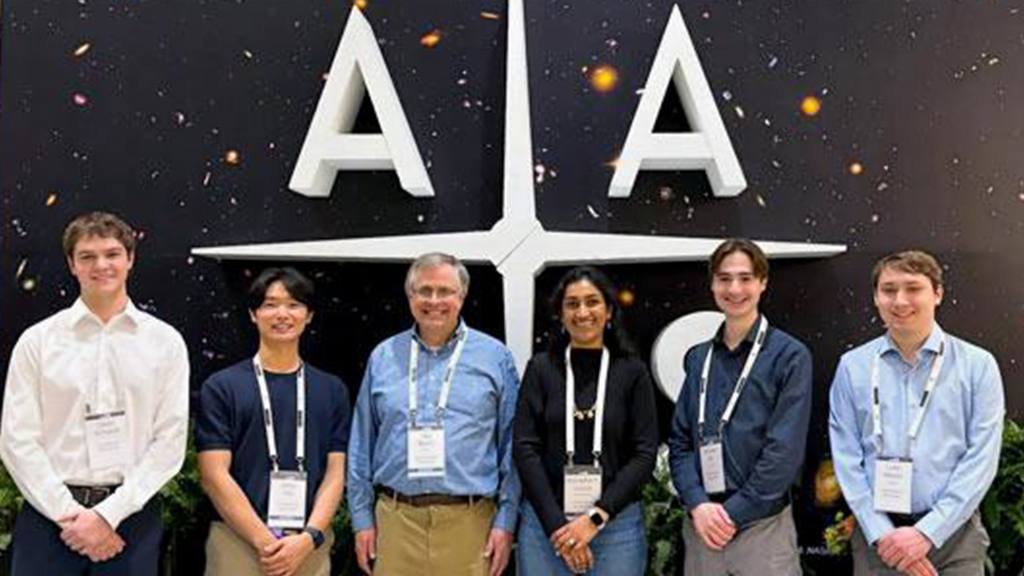
Throughout the year students present their research at various local, regional, and national conferences. The spring semester is particularly busy with students regularly attending the American Astronomical Society meeting in January and the American Physical Society Global Summit in March as well as regional conferences like the Virginia Academy of Sciences. Congratulations to everyone whose work culminated in an accepted abstract and poster or oral presentation!
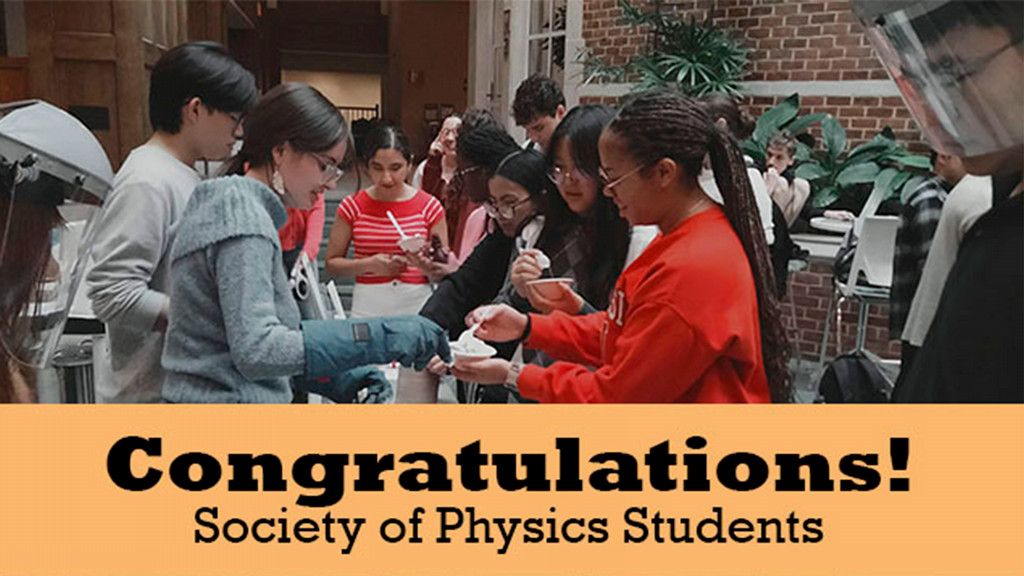
The University of Richmond Society of Physics Students was recognized by the national office with a distinguished chapter award for their work during the 2024-2025 academic year. During the year the SPS hosted events like Astronomy nights, deconstruction nights, and the physics picnic. They also went to lunch with guest speakers and hosted the student part of the physics awards ceremony. Congratulations to all work worked to support our physics community!
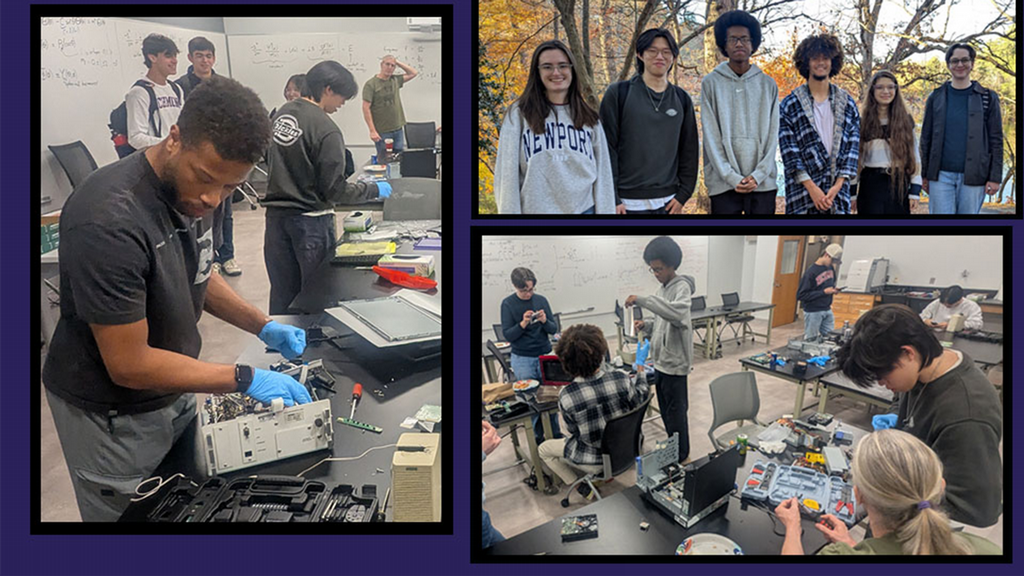
University of Richmond’s Society of Physics Students hosted the University of Mary Washington for an evening of deconstruction. Students enjoyed pizza while disassembling equipment ranging from DVD players and cell phones to LCD monitors and microwaves. Dr. Matt Trawick provided insight into the various electronics while students identified and explored components such as heat sinks, lasers, motors, diffusers and polarizers.
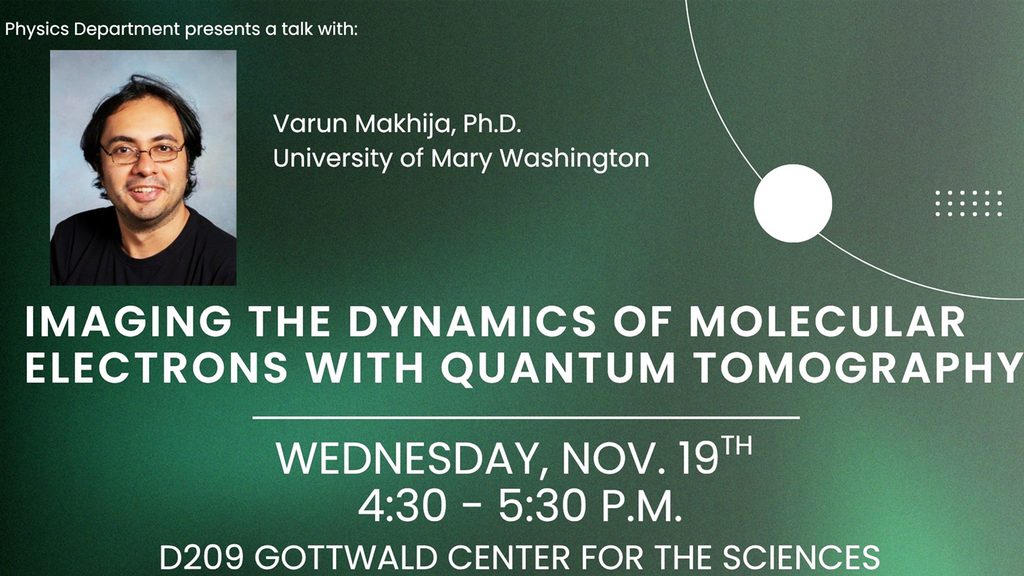
Join us for a talk with Dr. Varun Makhija from the University of Mary Washington. When visible light is absorbed by matter its energy is transferred primarily to electrons. In a very short time after this absorption, about 100 fs (1 fs = 10-15 seconds), structural changes can occur. An example is the change of the retinal molecules in your eye when they absorb light that initiates a chain of events that results in an image forming in your brain.
Prior to structural change, how did the electrons exchange energy with the atomic nuclei causing them to move? We do not know. Simulations are difficult because the electrons are entangled with nuclei and quantum effects are dominant. Makhija will discuss how we can image the rapidly changing probability distribution of these electrons, and how we might learn about the energy transfer process from such imaging.
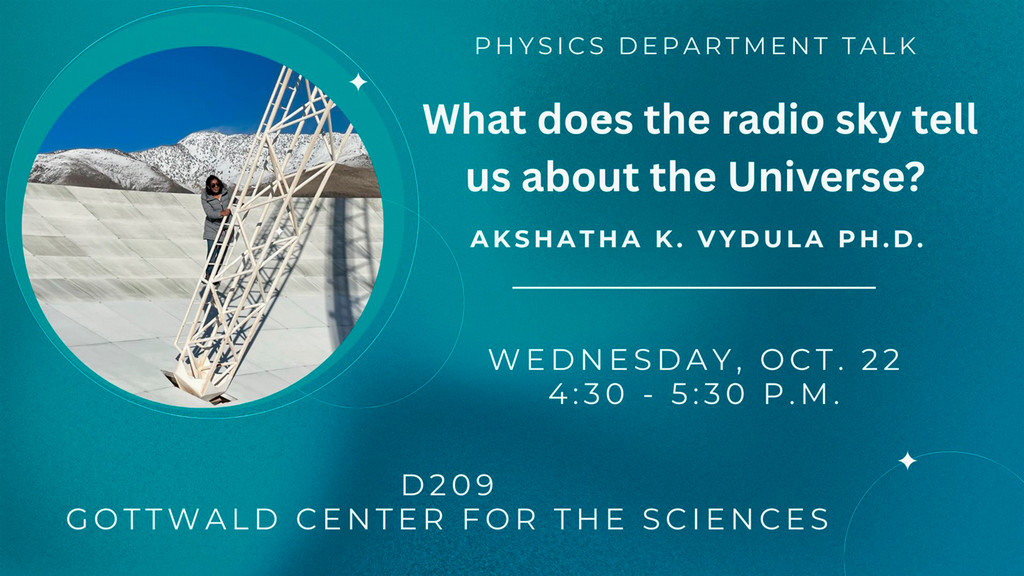
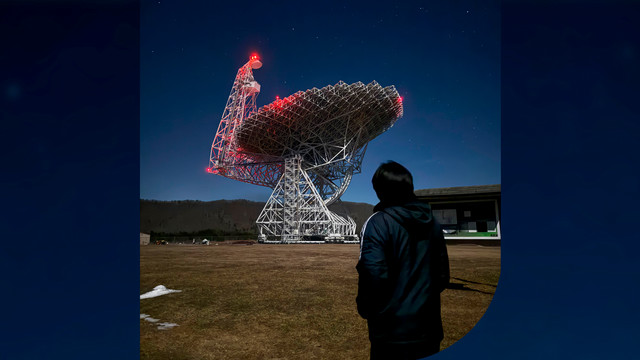
Join us for a talk with Dr. Akshatha Vydula, a Postdoctoral Research Associate in the Department of Physics whose research explores the early Universe and the formation of the first stars and galaxies. She develops calibration and analysis tools for low-frequency radio telescopes and is part of the EDGES collaboration—the only experiment to have reported a detection of the redshifted 21cm signal from cosmic dawn. Dr. Vydula’s research also spans modeling galactic radio recombination lines and measuring the neutron lifetime using data from NASA’s Lunar Prospector mission. At UR, she is currently working with Dr. Jack Singal to produce an absolutely calibrated sky map at 310 MHz using the Green Bank Telescope in West Virginia.
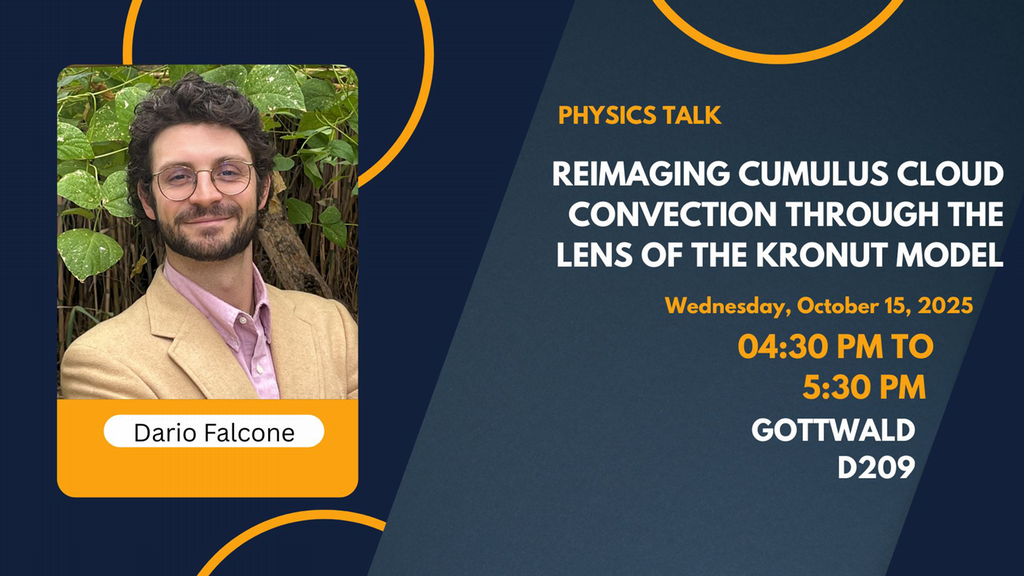
Join the UR Physics Department for a talk with Dario Falcone ’20, a 5th year Ph.D. candidate at UC Davis. Falcone explores the complex physics of clouds and their role in climate uncertainty. Specializing in atmospheric modeling, he introduces his novel Kinematic Representation of Non-rotating Updraft Tori (KRoNUT) model- a framework for understanding cumulous cloud behavior and improving thier representation in climate models. His research offers fresh insights into the hidden dynamics of cloud formation and the importance of cloud-scale circulations in shaping Earth’s climate future. The Talk will be held on Wednesday, October 15th at 4:30 p.m. in the Gottwald Center for the Sciences D209.
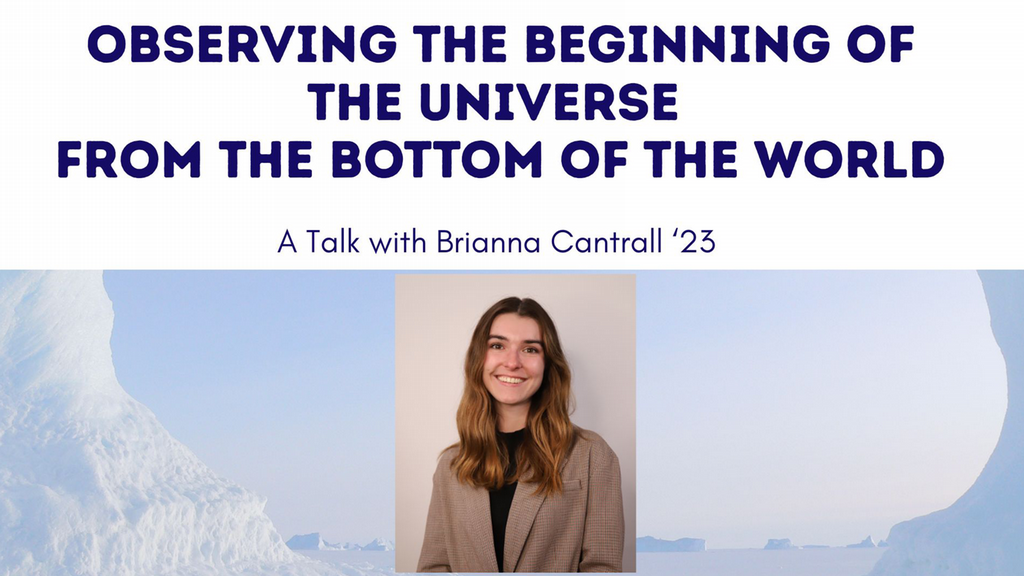
You’re invited to a special talk with the Department of Physics alum, Brianna Cantrall, who will share her experiences conducting research in Antarctica on the cosmic microwave background (CMB) radiation. Don’t miss this opportunity to learn about her exciting work at the edge of the world! The Talk will be held on Wednesday, October 1st at 4:30 p.m. in the Gottwald Center for the Sciences D209.
Christine Helms, associate professor of physics, unpacks the perfect dive using science as demonstrated by diver Sally Harrington, '26.
In less than two minutes, you can learn how to throw the perfect spiral with associate professor of physics Christine Helms and quarterback Kyle Wickersham.
In this behind-the-scenes video, physics major Paige Delsa, ’25, speaks to what she loves about her Richmond experience, emphasizing the liberal arts approach that enables her to explore and grow in all her interests.
Paige highlights her physics research saying, “I was really curious what I could do with experimental physics 'cause that wasn’t a space that I had really learned about before. I’ve been doing it for two years now [and] we’re in the process of writing a paper…. I’ve really enjoyed working with Dr. Dias in this lab on such a cool project.”
In this Ted Talk, Dr. Jack Singal says the beauty of our universe is largely unobservable to the naked eye. To understand what is happening, we need to harness all the light we cannot see. Dr. Singal shows us how utilizing wavelengths from radio to gamma-rays will change how we see the universe.

UR physics professor Jack Singal explains what we’re seeing in stunning new images from the James Webb Space Telescope.
Ovidiu Lipan was promoted to professor of physics. His research is focused on various aspects of the interplay between discrete and continuous models in theoretical physics, with a recent highlight on the connection between discrete and continuum electrodynamics.

Mariama Rebello de Sousa Dias, associate professor of physics, published “Physics-informed generative adversarial networks applied to dichroic filters’ properties regression” in Physica Scripta.

Mariama Rebello de Sousa Dias, associate professor of physics, published "Anisotropic Optical Response of Gold-Silver Alloys" in Physica Status Solidi (RRL) - Rapid Research Letters.
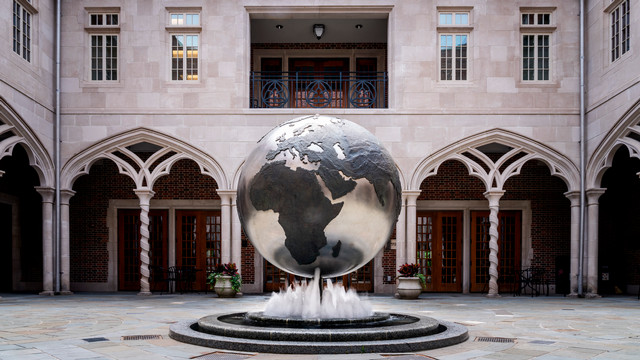
Richmond is among the top 25 institutions in the small colleges category supporting Gilman Scholars. Since the program started in 2001, 118 University of Richmond students have been offered Gilman Scholarships.
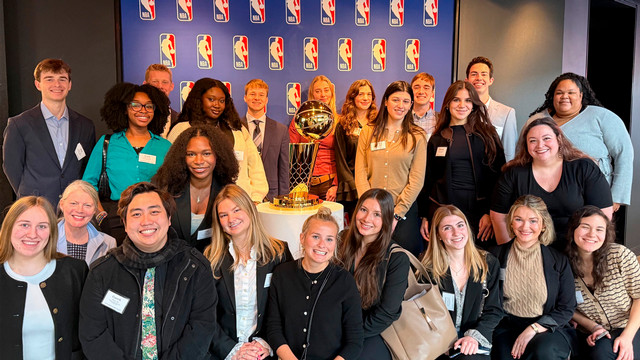
Spiders travel to the Big Apple to meet alumni in creative careers, including at NBCUniversal, Amazon Ads, and the NBA.
Mailing address:
Department of Physics
Gottwald Center for the Sciences
138 UR Drive
University of Richmond, VA 23173
Phone: (804) 289-8252
Fax: (804) 484-1542
Academic Administrative Manager: Susan Wolski
Chair: Christine Helms